NAC Zambia nac.org.zm
Zambia’s HIV Prevention Challenge: Can New Approaches Help Turn the Tide?
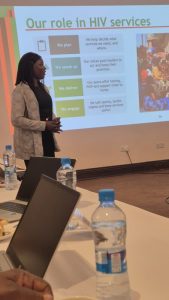
Zambia has made significant progress in its HIV response, but the country continues to face a major challenge in reducing new HIV infections. Recent figures presented at the Sustainable Community-Driven Approaches for Lenacapavir (SCALE-IT) stakeholders meeting point to the need for renewed focus, innovation, and stronger action in HIV prevention.
Speaking at the meeting held at Sandy’s Creation on 11 August 2026, Professor Lloyd Mulenga noted that Zambia remains off track to achieve its HIV prevention targets. The country had committed to reducing new HIV infections to fewer than 5,000 by 2025. However, Zambia is currently recording approximately 29,000–30,000 new HIV infections annually. The figures raise an important question: Are current HIV prevention approaches enough to change the trajectory of the epidemic?

Professor Mulenga noted that new HIV infections are outpacing AIDS-related deaths, with the incidence to mortality ratio currently standing at 1.87. A ratio above one indicates that the epidemic is not yet under control. To get back on track, Zambia would need to reduce new HIV infections by approximately 23% annually, compared with the current reduction rate of about 9.5%.
This gap highlights the need to move beyond business as usual and explore innovative approaches that make HIV prevention services more accessible, responsive and relevant to the needs of different communities. One of the approaches under discussion is a proposed pharmacy-based delivery model for pre-exposure prophylaxis (PrEP). The model could create additional access points for HIV prevention by allowing individuals to obtain PrEP through participating pharmacies, potentially bringing prevention services closer to the people who need them.
However, stakeholders emphasized that innovation must be accompanied by appropriate safeguards. The Health Professions Council of Zambia stressed that implementation must operate within the law and place patient safety at the centre. Zambia Medical Regulatory Authority (ZAMRA) also highlighted the importance of strengthening pharmacovigilance, including generating Zambia-specific information on adverse effects and experiences among PrEP users, including pregnant and breastfeeding women, while ensuring that participating pharmacies maintain appropriate PrEP user registers.
Civil society welcomed the proposed model and emphasized the importance of creating demand for PrEP. At the same time, stakeholders stressed that demand-generation efforts must be matched by consistent availability of the commodity. There is little value in encouraging people to use a prevention service if they are unable to access it when they need it.
The discussion therefore goes beyond introducing a new service delivery model. It is about examining how HIV prevention services are designed, accessed, delivered, and whether the health system is prepared to support differentiated approaches at the scale required.
The pharmacy-based PrEP delivery model presents an opportunity to explore new ways of expanding access to HIV prevention. But its success will depend on strong regulation, patient safety, reliable commodity availability, effective monitoring, and meaningful engagement with communities.
Ultimately, the bigger question is not simply whether pharmacy-based PrEP can work. It is whether Zambia is prepared to embrace evidence-informed prevention models at the scale and speed required to change the trajectory of the epidemic.
The numbers are telling us something. Are we listening?