NAC Zambia nac.org.zm
Lusaka, Zambia – 6 October 2026
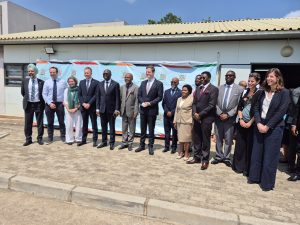
A United Kingdom Parliamentary Delegation has visited Zambia to strengthen collaboration on global health and the country’s progress in the HIV and AIDS, Tuberculosis (TB) and Malaria response.
The delegation, comprising Members of Parliament, health professionals and global health advocates, held discussions with the Government of the Republic of Zambia, the Ministry of Health, the National HIV/AIDS/STI/TB Council (NAC), the Country Coordinating Mechanism (CCM), civil society and other health-sector stakeholders.
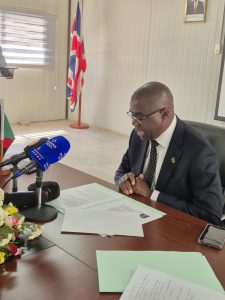
Updating the delegation, the Minister of Health, Professor Roma Chilengi, emphasised the importance of continued international partnerships in strengthening Zambia’s health sector. The minister emphasised Zambia’s need to progressively take greater ownership of financing and sustaining its health programmes. It was indicated that increasing domestic financing should not mean abruptly eliminating partner support, and that government and partners to continue working together to strengthen overall health financing and ensure that essential services are not disrupted. Professor Chilengi further highlighted the need for partnerships to deliver sustainable benefits to Zambia and to contribute to the strengthening of the health system.
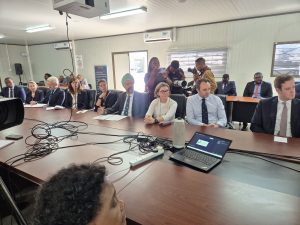
Michael Payne, Member of the UK Parliament and Co-Chair of the UK All-Party Parliamentary Group on HIV and AIDS, showed gratitude to the Minister and the Government of Zambia for hosting the delegation. He commended Zambia’s leadership in the HIV, TB and malaria response and further indicated that the delegation was keen to understand the impact of the Global Fund and the longstanding relationship between the United Kingdom and Zambia. The delegation also expressed interest in Zambia’s health innovations and the lessons to mirror in the UK health system.
The delegation was briefed that approximately 1.3 million people in Zambia are receiving HIV treatment, and that significant progress has been made in preventing mother-to-child transmission, with transmission reduced substantially from previous levels. Stakeholders noted continuing challenges among young people, adolescents and young women, as well as children and key populations. Paediatric HIV remains a particular concern, as children continue to lag behind adults in the HIV treatment cascade. The Ministry emphasised the need for early diagnosis, improved linkage to treatment and stronger child-focused services. Zambia is also scaling up long-acting HIV prevention while working to ensure continued access to prevention and treatment services for communities and key populations.
On TB, the delegation heard that Zambia is strengthening case finding through community outreach, mobile X-ray services, contact tracing, rapid diagnostic testing and improved specimen transportation. The country is also expanding access to shorter treatment regimens, including oral treatment for drug-resistant TB. The programme continues to rely on strong community participation, with particular attention given to populations at greater risk, including people living with HIV, children, healthcare workers, prisoners, miners and men.
Zambia’s malaria response continues to combine vector control, testing and treatment, community-based services and new prevention technologies. The introduction of the malaria vaccine was highlighted as an important addition to the national prevention strategy. The programme is also exploring new tools to address changing transmission patterns and resistance, while strengthening community structures and expanding preventive interventions to other at-risk populations.
The meeting recognised the significant contribution of the Global Fund to Zambia’s HIV, TB and malaria responses over the past 20 years, which has supported medicines, diagnostics, prevention, community services and health-system strengthening. At the same time, Zambia is working to increase domestic financing and ownership of its health programmes. A sustainability roadmap has been developed, supported by short-, medium- and long-term strategies aimed at progressively increasing domestic responsibility for the HIV response. Stakeholders also highlighted opportunities to expand private-sector involvement in health financing, particularly in the malaria response.
The visit provided an important platform for strengthening parliamentary and health-sector cooperation between Zambia and the United Kingdom. Discussions identified opportunities for continued collaboration in global health advocacy, sustainable financing, health innovation, research, health-system strengthening and community participation. The engagement reaffirmed the importance of maintaining strategic partnerships while Zambia increases domestic investment in health, and demonstrated the shared commitment of both countries to sustaining progress in the HIV, TB and malaria response and strengthening health systems for improved health outcomes.