NAC Zambia nac.org.zm

As Zambia works towards ending AIDS as a public health threat by 2030, strong local government leadership is essential to sustaining progress, protecting essential services and ensuring that HIV remains a development priority.
This was the key message from the National HIV/AIDS/STI/TB Council (NAC) during the Joint 70th Local Government Association of Zambia (LGAZ) Annual Conference and 23rd Alliance of Mayors and Municipal Leaders on HIV and AIDS in Zambia (AMICAALL) General Assembly, being held from 25th to 27th November 2026 at the Mulungushi International Conference Centre in Lusaka. The conference is being held under the theme, “Building Prosperous Communities through Local Economic Development and Inclusive Governance.”
Delivering remarks on behalf of NAC Director General, Dr. Kebby C. Musokotwane, Director of Programmes, Mrs. Katongo Silwizya, highlighted Zambia’s progress, with adult HIV prevalence declining from 12.8% in 2010 to 8.0% in 2025, while new HIV infections fell from 68,000 to 23,000. However, she noted that young people aged 15–24 account for approximately 37% of new HIV infections, underscoring the need for sustained, targeted and accessible interventions.
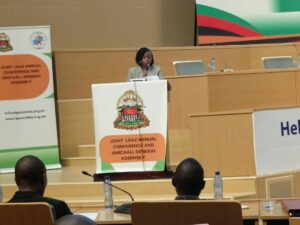 Mrs Silwizya emphasised that HIV is not only a health issue but also a development concern, as its impact extends to household incomes, productivity, education and local economic growth.
She further called for urgent clarification on the institutional placement of the district-level HIV coordination function following the regrading of District AIDS Coordination Advisors (DACAs) under the ongoing local government restructuring. NAC urged the Local Government Service Commission to expedite communication on the matter and encouraged Town Clerks and Council Secretaries to keep District HIV/AIDS Committees functional and integrate HIV, STI, TB and adolescent health into council plans and budgets.
AMICAALL presiding Chairperson, Dr. Kenneth Mwansa, reinforced the importance of local leadership, calling on councils to protect essential services, mobilise local resources and ensure the meaningful participation of young people, women and people living with HIV.
Meanwhile, UNAIDS Country Director, Dr. John Mwale, also stressed the importance of community ownership and called for action to address inequalities in access to health technologies, essential services and rights.
Ending AIDS cannot rest with the health sector alone. Local authorities must provide leadership, sustain coordination, mobilise resources and ensure that HIV interventions are reflected in local development priorities.
When local authorities lead, communities thrive. Healthy communities are prosperous communities.