NAC Zambia nac.org.zm
Lusaka, Zambia – 3 September 2026
Zambia has officially launched the 2025 HIV Spectrum Estimates, providing an updated picture of the national HIV epidemic and critical evidence to guide planning, programming, resource allocation and the country’s journey towards ending AIDS as a public health threat by 2030.

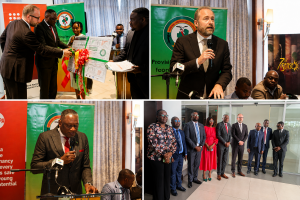
The estimates were launched today at The Quorum Hotel in Lusaka by Dr. Kennedy Lishimpi, Permanent Secretary–Technical Services, Ministry of Health, before an audience of government officials, development partners, civil society organisations and technical experts who gathered to review Zambia’s HIV response and identify priority actions to sustain progress towards 2030.
Key Highlights
- 1,308,000 people were living with HIV in Zambia in 2025.
- Adult HIV prevalence (ages 15–49) declined from 12.8% in 2010 to 8.0% in 2025.
- New HIV infections fell from 68,000 (2010) to 23,000 (2025), a 66% reduction.
- AIDS-related deaths fell from 35,000 to 16,000 indicating a 56% reduction.
- Zambia achieved the UNAIDS 95-95-95 targets: 96% know their status, 99% of those are on treatment, 97% of those are virally suppressed.
- Mother-to-child transmission declined from 23% (2010) to 6.1+2% (2025), still above the <5% elimination target.
- Women account for 64% of people living with HIV and 61% of new infections.
- 74,000 adolescent girls/young women and 37,000 adolescent boys/young men (15–24) are living with HIV; this age group accounts for 37% of new infections, with young women representing 80% of new infections within it.
- Lusaka and Copperbelt together account for 43% of people living with HIV nationally.
Dr. Lishimpi stressed that the Spectrum Estimates are more than technical projections, they are strategic tools informing the National HIV/AIDS Strategic Framework, the National Health Strategic Plan and financing decisions, including Global Fund investments. He called for intensified action on HIV prevention and PrEP, SRHR, voluntary medical male circumcision, DREAMS programming, PMTCT, early antenatal care, retention in care, and screening for advanced HIV disease, TB and Hepatitis B.
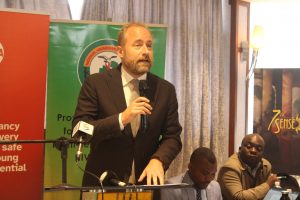
UNFPA Country Representative Seth Broekman commended Zambia’s progress but cautioned that declining external financing could threaten these gains, calling for greater investment in prevention for adolescent girls and young women and for translating evidence into epidemiological and geographical action linking HIV programming with SRHR, gender-based violence response and psychosocial support.
Mr. Calvin Kalombo, Director of Planning and Policy, Ministry of Health, noted that the estimates together with NAOMI subnational data showing that HIV burden is not uniform across the country create an opportunity to move away from one-size-fits-all programming towards differentiated, evidence-led interventions.
Presenting the 2026 Global AIDS Report, UNAIDS Strategic Information Adviser Dr. John Mwale noted that global progress remains real but fragile: 40.9 million people were living with HIV worldwide in 2025, with 1.2 million new infections and 570,000 AIDS-related deaths. New infections have fallen 43% since 2010, but funding disruptions are placing prevention, testing, PrEP and community-led responses under increasing pressure reinforcing the need for sustainable, country-owned, and adequately domestically financed responses.
Zambia has made substantial gains such as reduced prevalence, fewer new infections and deaths, and achievement of the 95-95-95 targets. Yet gaps remain: adolescent girls and young women remain disproportionately affected, mother-to-child transmission sits above the elimination threshold, and geographic disparities call for more targeted programming.
For the National HIV/AIDS/STI/TB Council, the message is clear: the value of data lies in how effectively it is translated into action. Every percentage point represents people. Every infection prevented represents a life protected. Every person diagnosed, linked to treatment and virally suppressed brings Zambia closer to ending AIDS.
Together, let us accelerate Zambia’s journey towards epidemic control and ending AIDS as a public health threat by 2030.