NAC Zambia nac.org.zm
Investing in Local Pharmaceutical Manufacturing Key to Sustainable National Health Security – Prof. Kasonka
Development sector investment, government incentives, and structured corporate financing are critical building blocks for strengthening national health security through sustainable local pharmaceutical manufacturing.

In his keynote address, Professor Lackson Kasonka, Permanent Secretary for Special Duties, said Zambia has, for a long time, depended on external financing for its HIV, STI and TB response.
The Permanent Secretary underscored the need for Zambia to strengthen local manufacturing of HIV prevention commodities through strategic partnerships involving government, the private sector, development partners, and international stakeholders.
Speaking on the country’s long-term health security agenda, he said sustainable local production of HIV prevention commodities would reduce dependence on imports, strengthen supply chains, and improve access to essential health products.
He stressed that achieving this vision requires coordinated investment from both domestic and international partners, supported by an enabling policy environment and innovative financing mechanisms.
“Within HIV prevention commodities, we must determine how best to bring together government, the private sector, and development and international partners to support the local manufacturing of these essential commodities,” he said.
The Permanent Secretary also reaffirmed government’s commitment to maintaining existing domestic investment in HIV programmes, explaining that the principle of additionality requires that new financing complement, rather than replace, current government funding.
Also speaking at the event, the National HIV/AIDS/STI/TB Council (NAC) Director General, represented by the Director of Policy and Planning, Dr Peter Ndemena, said Zambia had surpassed the UNAIDS 95-95-95 targets, with 98 percent of people living with HIV aware of their status, 98 percent of those diagnosed on treatment, and 97 percent of those on treatment virally suppressed.
He, however, cautioned that these gains risked being reversed if reduced donor funding is not urgently cushioned by increased domestic financing, adding that the private sector had a critical role to play in closing the funding gap left by reduced PEPFAR support.
The remarks reinforce government’s commitment to strengthening Zambia’s health security by promoting local pharmaceutical manufacturing, safeguarding HIV investments, and fostering partnerships that will ensure sustainable access to HIV prevention commodities for years to come.
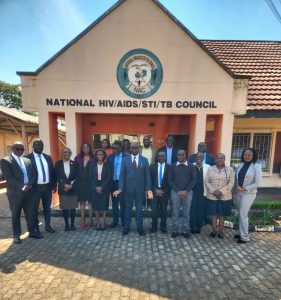
The event was attended by representatives from the Ministry of Small and Medium Enterprise Development, the Ministry of Finance, the Ministry of Health, and the Public Private Dialogue Forum.